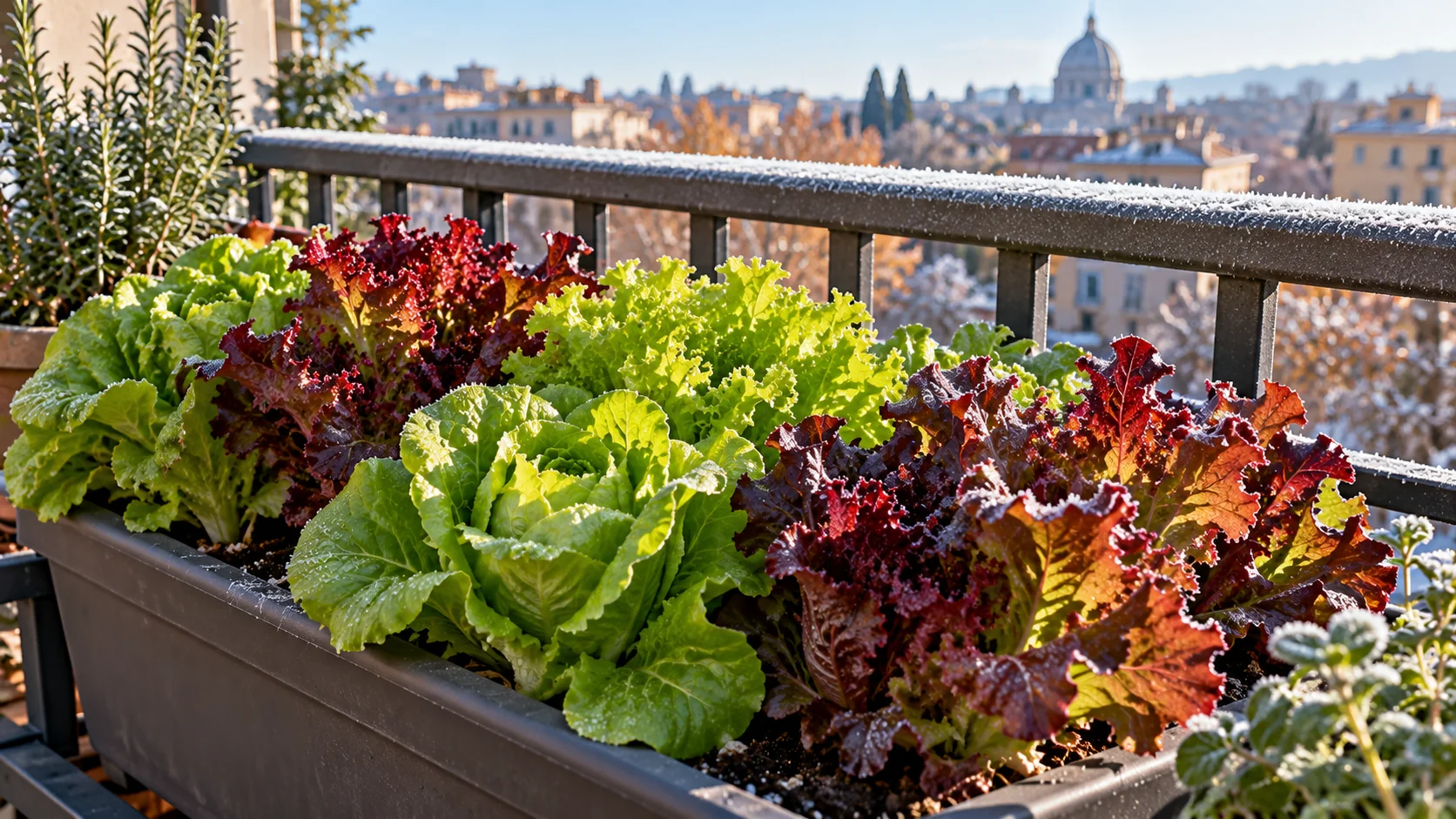

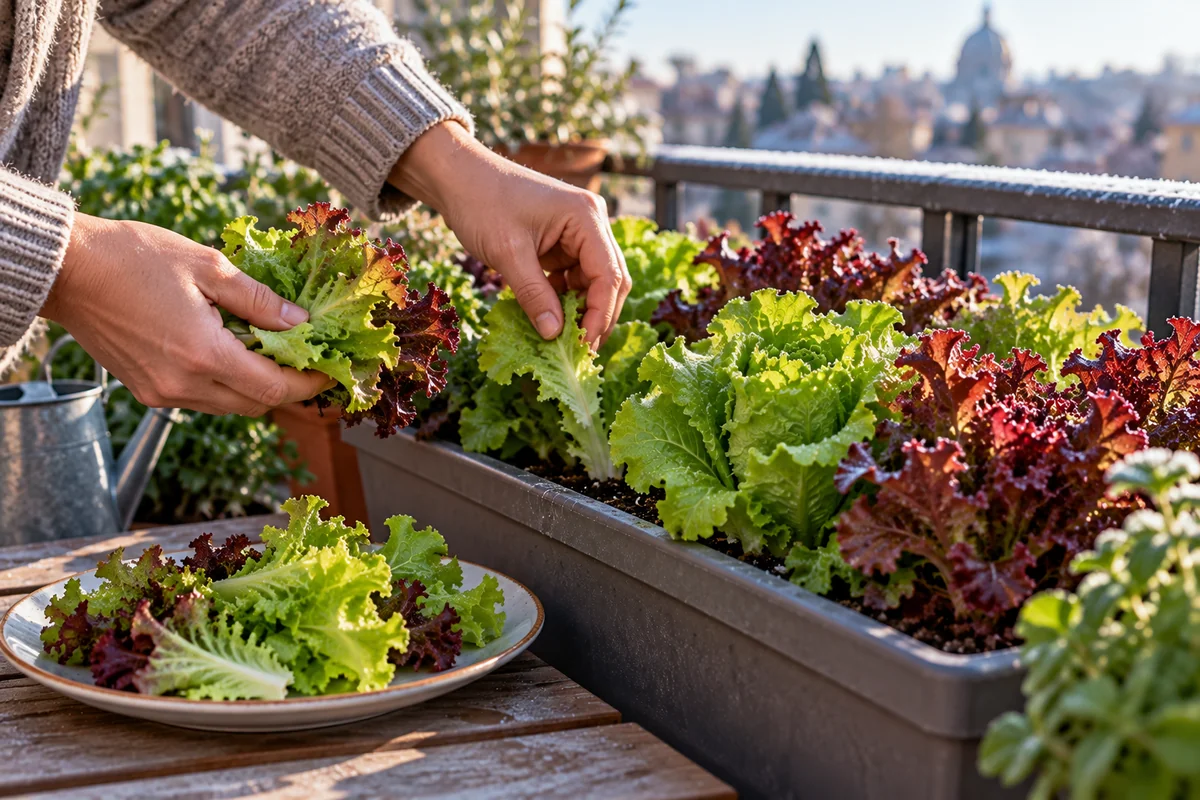
In February, in the middle of the freeze, there are people who harvest lettuce from the balcony. It is not a miracle: it is a question of the right variety, sowing in September–October and a fleece over the coldest nights.
Winter lettuce is the easiest crop of the cold garden: a 60–90 day cycle in mild Italian climates (cut-and-come-again types keep going, head types give one harvest), and young plants tolerate frost better than young summer plants (down to −2/−3 °C with protection, and even more once formed).
The full plant profile is in Lettuce. Here the focus is one: get you to March with fresh salad.
What “winter lettuce” to choose
It is not a species of its own: they are winter-cycle varieties, selected to germinate and grow even at 8–12 °C. The two families to look for on the packet:
- Brune d’Hiver / winter lettuce: compact head, dark leaf, the hardiest in absolute terms. Germinates from 8 °C up and withstands −3 °C as a formed plant.
- Early winter heading lettuce: small heads, a “leaf by leaf” harvest that lasts months.
The right packet always says “winter” or the autumn sowing weeks. The 500-piece Brune d’Hiver seeds are one of the few available on Amazon explicitly indicated for winter growing, cold-resistant and reproducible.
When to sow (and why not in November)
| Sowing | Harvest | Notes |
|---|---|---|
| Late September | December–January | The easiest: the plants are formed when the cold arrives |
| October (first 2 weeks) | January–March | Works while the days have light |
| November | — | Climate-dependent: no in the North and the inland centre-north; possible but slow on southern and island coastlines, with fleece over it |
The practical rule: sow while the ground is still above 12 °C by day. In November that still holds only on southern and island coastlines; in the continental centre and the North, winter light no longer reliably starts germination.
If you missed the train in October, the honest alternative: a nursery winter seedling in November, not the seed.
The pot and the substrate
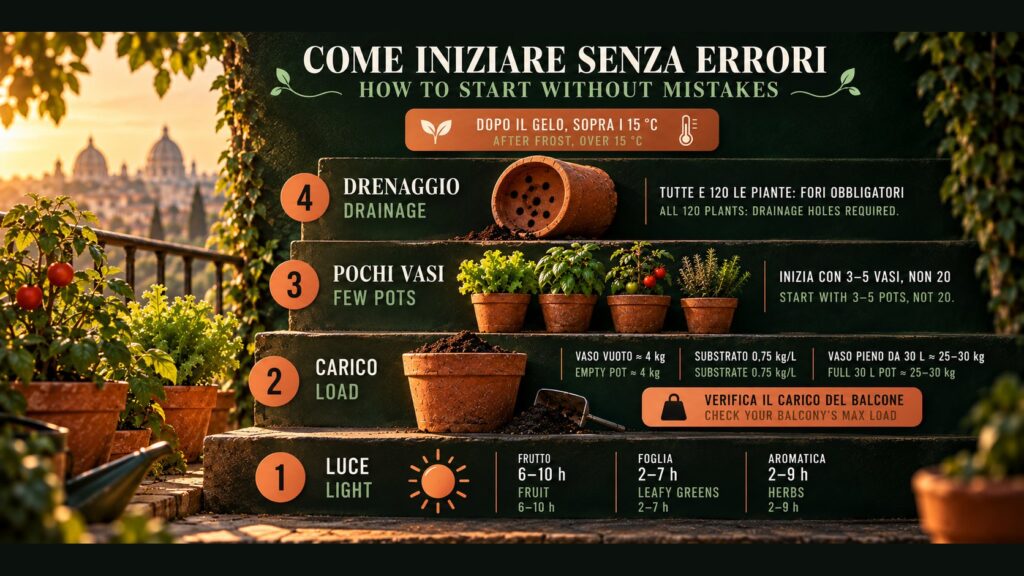
- Volume: the tools record 6 L and 18 cm of depth as the minimum; here we recommend 10 L per plant: the extra volume buffers winter temperature and water. Alternatively, a 50×20×15 cm tray (about 12–14 litres) with 4–6 plants in two staggered rows at 12–15 cm: that is a leaf-harvest density, not full heads — for a single head keep 10 L per plant.
- Substrate: the usual 60/30/10 mix (compost/expanded clay/perlite). In winter you no longer need rich “garden” compost: the cycle is slow and excess nitrogen in the cold produces soft leaves that rot.
- Position: as much sun as possible. In December the sun is low: a south or south-west-facing balcony makes the difference between a harvest and nothing. The full guide is in Protection from weather.
Sowing and thinning, step by step
- Prepare the tray or pot the day before: moist substrate, not sodden.
- Seeds on the surface: 1–2 seeds every 10 cm, at 0.5 cm depth. Lettuce wants light to germinate: do not cover more than 5 mm.
- First month: no transplanting, no potlets. Let it grow in place and thin to 15–20 cm when the plants have 3–4 true leaves. The thinnings are eaten, not thrown away.
- Feeding: one dose of slow-release fertiliser at planting and that is enough for autumn. In winter you stand still (below 8–10 °C root uptake slows dramatically).
The protection that makes the difference
Here you win or lose the winter harvest:
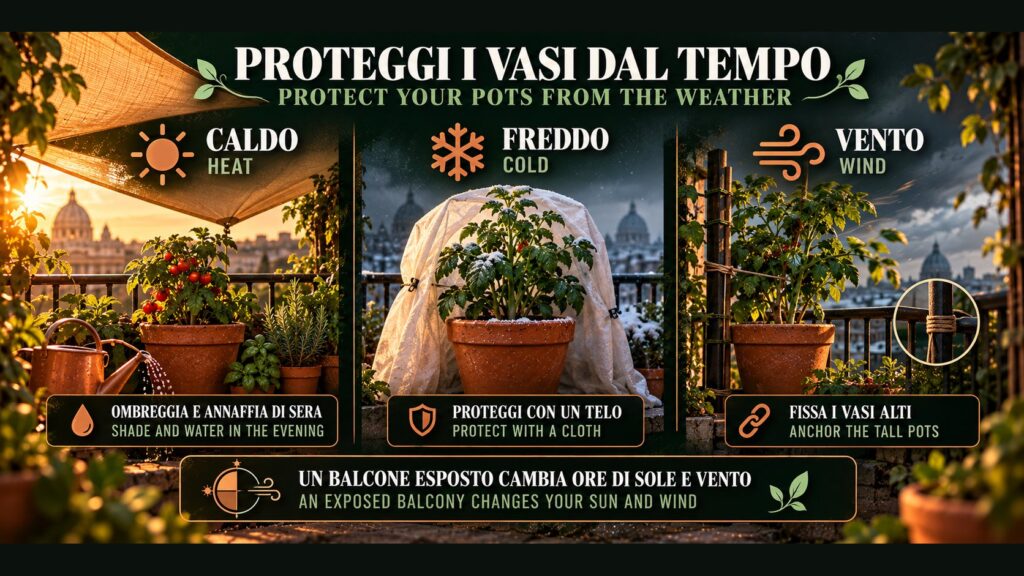
- Non-woven fleece (50 g/m²) over a frame (sticks or a lattice): +3–5 °C on frosty nights, and it lets light and water through. The Jarden anti-frost fleece 2 x 10 m covers 4–5 trays.
- When to use it: not all winter — only on nights below 0–2 °C. Nights too mild under the fleece favour downy mildew (humidity trapped for long stretches).
- Mini greenhouse: same logic, more expensive, but you can leave it open by day without work.
On a windless balcony the fleece is enough and then some. If your balcony is high up and windy, the mini greenhouse is worth the price.
Harvest: two strategies
- By head: the whole head forms indicatively 60–90 days from sowing in mild climates. Single but abundant.
- By leaf (my winter favourite): the outer leaves are harvested as needed, the plant keeps producing from the centre for 2–3 months. The cold hardens the sugars: winter lettuces are sweeter than August ones.
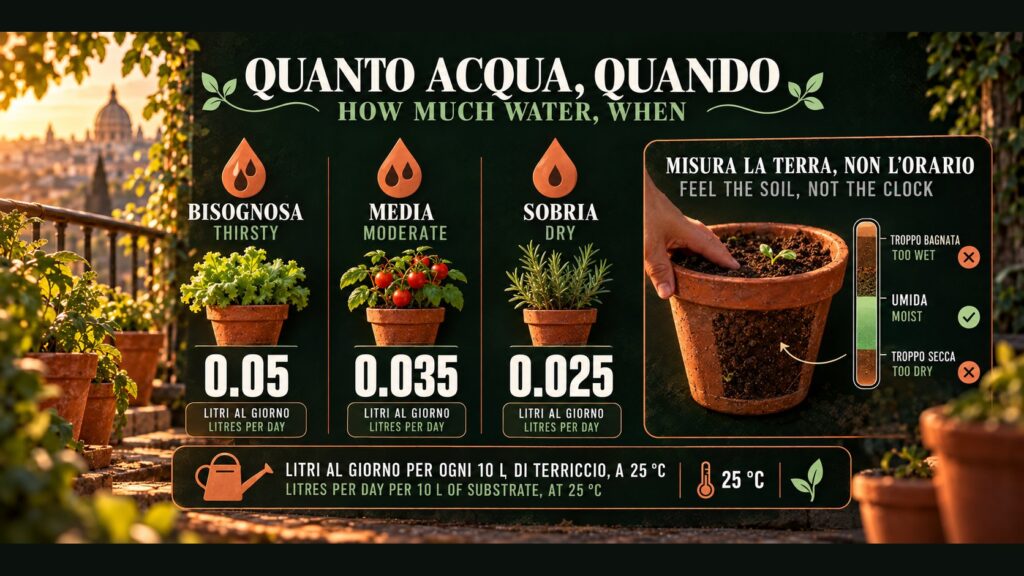
Watering in winter is done at midday, never in the evening: the substrate must dry again before the frost. The full routine is in Watering in containers.
Mistakes to avoid
- Sowing in November in an outdoor pot: outside the mildest maritime climates it rarely germinates reliably; if you are late, use a nursery seedling.
- Leaving the fleece on all winter: closed humidity, high downy mildew risk.
- Feeding in December: uptake is minimal, so excess salts sit in the pot and meet the roots again by March.
- Using a summer variety (like “big heads for late summer”): at 8 °C it does not start, or starts slowly and stays dwarf.
Recommended products in this article
| Product | |
|---|---|
| The 500-piece Brune d’Hiver seeds | View on Amazon |
| Jarden anti-frost fleece 2 x 10 m | View on Amazon |
Sources
- CREA — Growing lettuce: varieties, sowing and harvest by season (technical sheets)
- Orto da Coltivare — Lettuce: sowing calendar and winter growing guide
As an Amazon Associate I earn from qualifying purchases. Note: some links on this site are affiliate links: if you purchase through them, I may receive a commission at no extra cost to you. Affiliate links never influence my recommendations.