
The plant that “dies” is rarely already dead (the dying plant is recoverable)
When you open the pot and the plant looks like it has hours to live, the temptation is to throw it away. Almost never is it necessary: potted plants “faint” in 2–3 days, like a dying plant, but recover in a week, if you understood what is happening.
The diagnosis is not there to guess: it is there to look at 3 points, in order. Leaves, stem, roots. Five minutes, a pair of tweezers, a pot trowel.
The leaves: what they are telling you
The leaves are the clinical picture: they show the disease before it becomes serious.
| Look | Meaning |
|---|---|
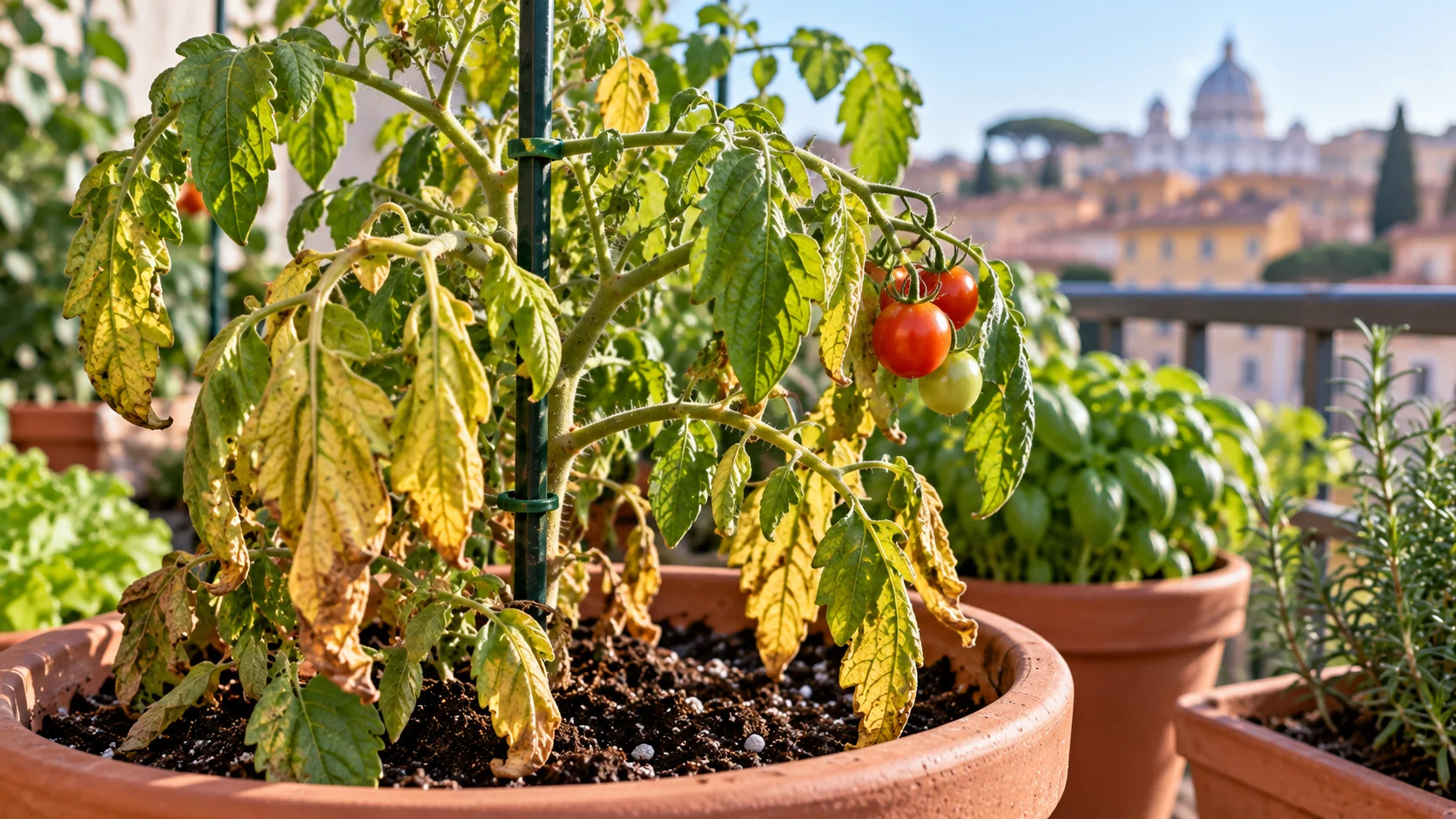
| Yellow, especially the old ones | Deficiency (nitrogen) or irregular watering |
| Yellow, especially the new ones | Wrong mix or too much fertiliser |
| Brown, crisp edge | Too much sun or little water |
| Black tip | Excess water or too much fertiliser |
| Heavy, limp | Excess water (roots without air) |
| Grey/whitish spots | Fungi: see the roots |
| Holes, thin spider webs | Pests |
Yellowed leaves alone are not a diagnosis: to know if it is water or deficiency, go to the complete guide on yellow leaves.
The stem: where the problem really starts
The leaves are the “where”, the stem is the “when”.
- Stem soft at the base, wet: the problem is below. Drowned, rotten roots. The plant is already in an advanced state.
- Stem dry, that breaks: it stopped taking water. Either it has been dead for a week (accepted), or it is severe water stress (you try to save it with 48 hours of constant irrigation).
- Healthy stem but sick leaves: the problem is superficial (light, fertiliser, pests). It is saved in 3–5 days.
- Stem with blackening in patches: fungus or rot. Cut away the black part until the living tissue, treat it, and save what you can.
The roots of the dying plant: the dig you cannot avoid
Here the real diagnosis is made. Take the plant out of the pot (tap it against the edge, do not pull it), look at the roots:
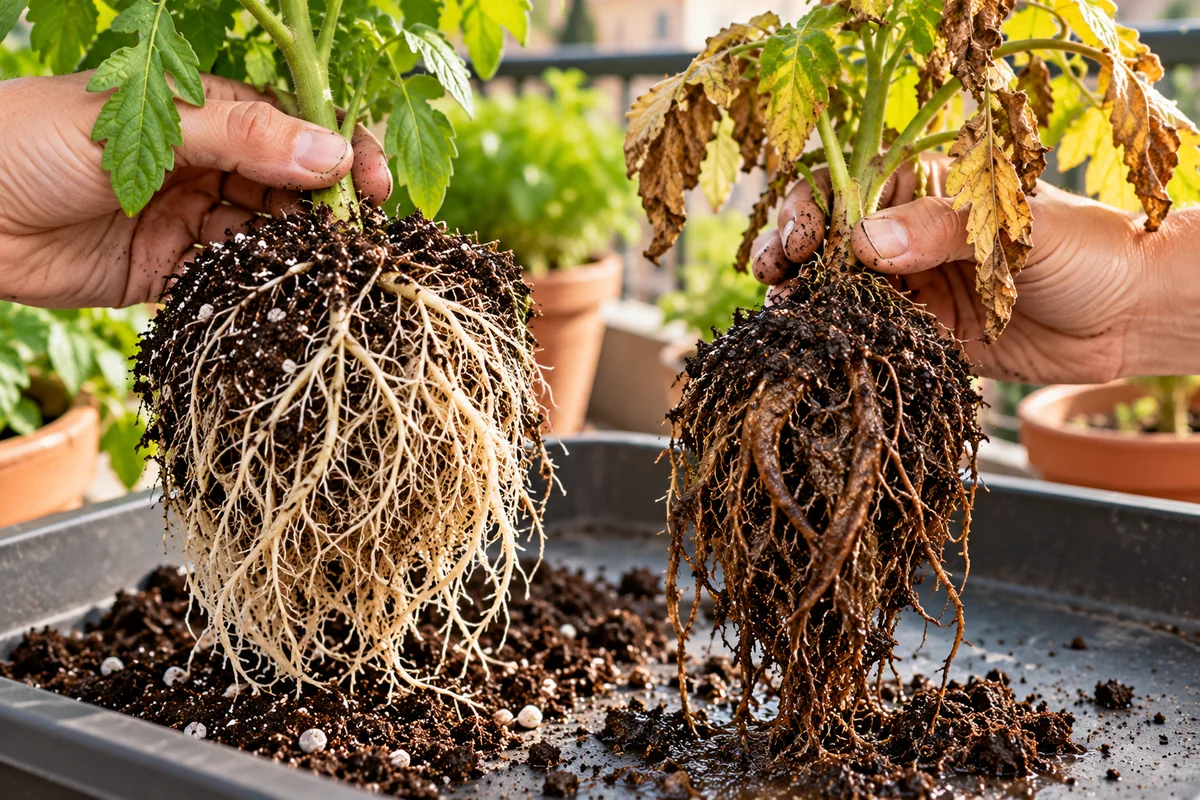
- White, firm, smell of soil: healthy. The problem is outside the roots (light, pests, mix).
- Brown, soft, smell of mould: drowned. It is the excess water. The cause no. 1 of plants dying in pots.
- No root visible: transplant done badly or plant that did not take.
- Roots making a circle inside the pot: it is too big for the pot. Change pot or refresh the mix.
If the roots are rotten: cut away all the brown (with clean shears), until the white. A plant with 30% of living roots recovers; with 5% it is a gamble, not a loss.
The 5 real causes of a dying plant, in order of frequency
- Excess water (60% of the cases). The pot without holes, the full saucer, the habit of “giving a drop” every day. The cure: watering done by the book, draining mix, holes in the bottom.
- Little light. The plant on the windowsill that “does not grow”. It is not sick: it is in a room that is too dark. Move it where it takes 4–6 hours of sun.
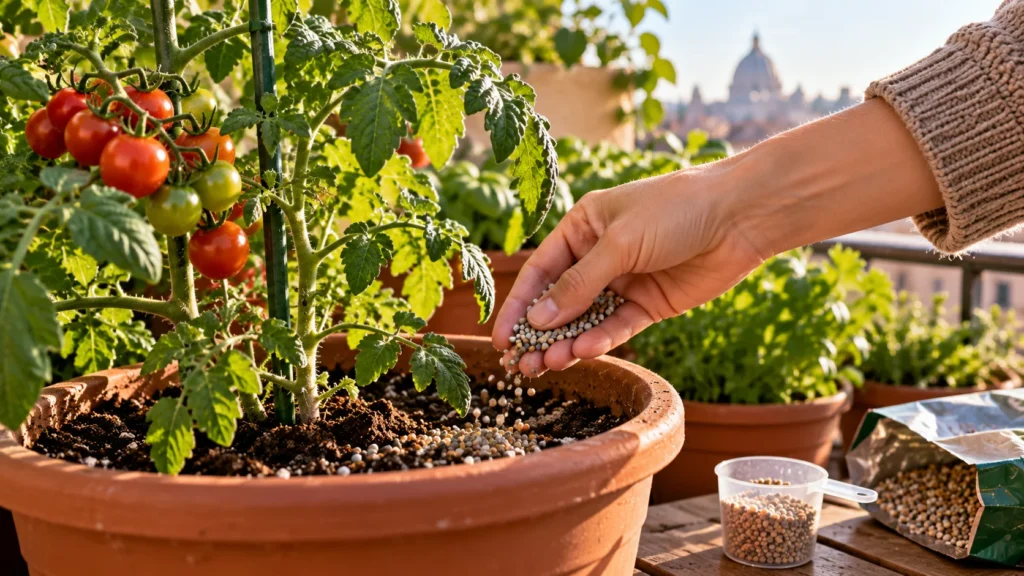
- Nutrient deficiency. A 30-litre pot without feeding lasts 6–8 weeks. After that, the plant is “dying” slowly.
- Cold or wind. The north-east exposed balcony in autumn. The roots at 5 °C stop drinking.
- Pests or fungi. Aphids, scale insects, powdery mildew. They are curable, but only after excluding the first 4.
The rescue plan for the dying plant
It depends on what you found:
Rotten roots (excess water):
1. Take away the old mix, all of it.
2. Cut the rotten roots to the white.
3. Put it back in a pot with holes (not in the saucer), fresh mix.
4. 48 hours without watering, then little water, every 3 days.
5. 10 days: if the new leaves stiffen, you saved it.
Little light: move it, nothing else. In 1 week it makes new leaves.
Deficiency: feed lightly (half dose) and wait 10 days.
Pests/fungi:
– For aphids, scale insects, red spider mite: neem oil in solution, sprayed on leaves and stem, 3 times at 5-day intervals.
– For powdery mildew, downy mildew, fungal spots: copper in prevention or at the first sign.
The general rules and the treatments for every pest family: common problems guide.
When to give up on the dying plant (honestly)
You throw the plant away when:
- The roots are all black and soft, without a centimetre of white.
- The stem detaches from the mix with a thread of dark water (base rot).
- It has been bare for 3 weeks and did not put out even one bud.
- It has a fungus you can see with the naked eye (white mould on the mix) and it comes back after the treatment.
In these cases it is not cruelty: it is not making the other pots sick.
The frequently asked questions
Can I save a plant that has all its leaves fallen? If the stem is still firm and the roots have some white, yes. Cut the stem 10 cm from the mix, keep it moist, and in 2–3 weeks it can bud again.
How long does the “convalescence” last? 2–3 weeks. Do not feed in this period: the wounded roots do not absorb it.
Is the saucer the cause? In 30% of the cases yes. Empty it 10 minutes after every watering: it is the most ignored rule of the balcony.
Are the yellow new leaves worse than the old ones? Yes: the old ones yellowing is the natural cycle; the new ones born yellow = wrong mix or pH.
Recommended products in this article
| Product | |
|---|---|
| neem oil in solution | View on Amazon |
| copper | View on Amazon |
Sources
As an Amazon Associate I earn from qualifying purchases. Note: some links on this site are affiliate links: if you purchase through them, I may receive a commission at no extra cost to you. Affiliate links never influence my recommendations.