
Starting a balcony garden doesn’t take a large surface: it takes a system. This guide gathers the steps that the whole site follows, using the real data of the 120 validated plant profiles. Before buying a single pot, read this page.
1. Assess your balcony’s light
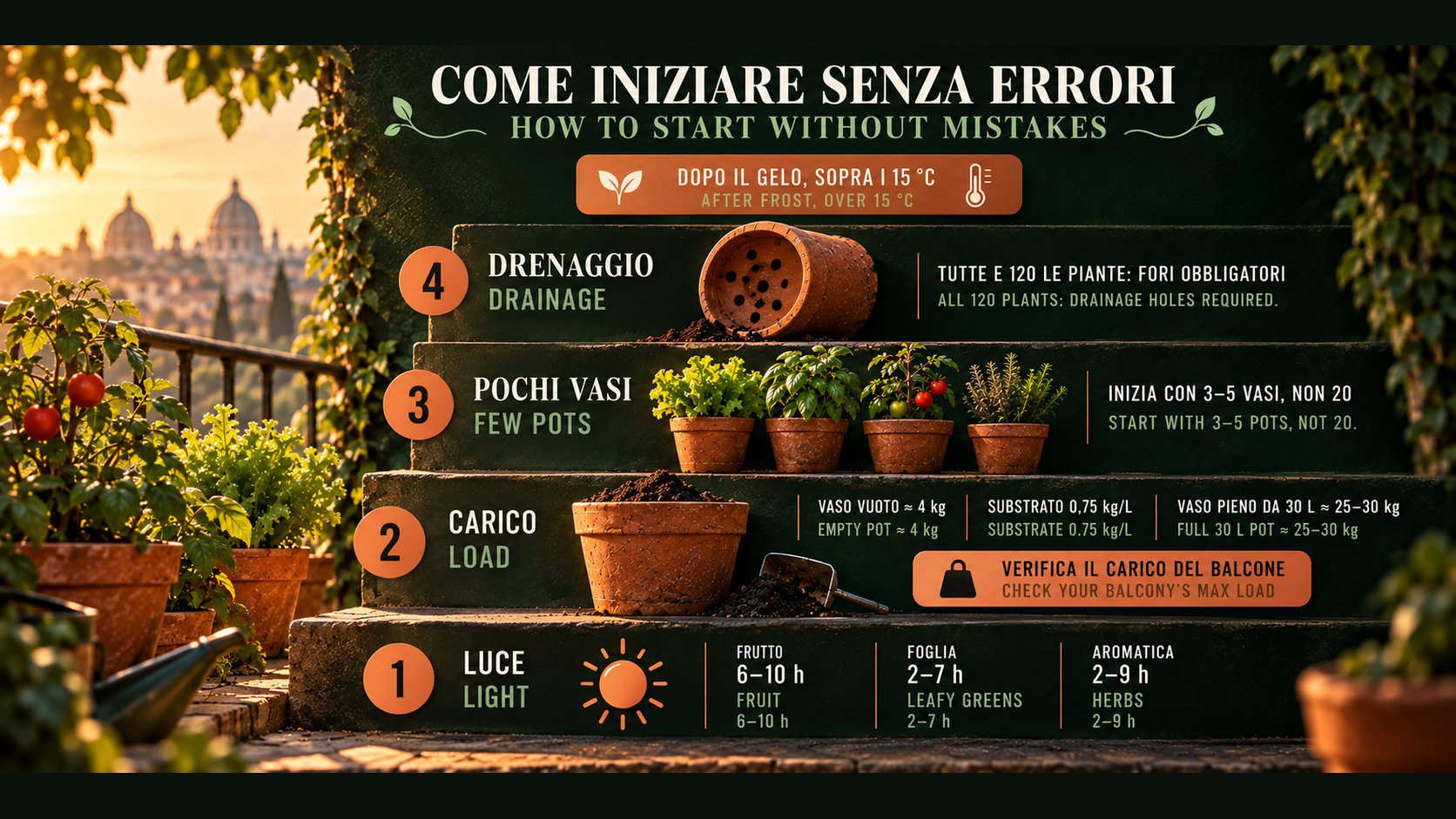
Light is the number one constraint. Each plant family has a different need, measured in hours of direct sun per day. From the 120-profile dataset: fruiting vegetables (tomato, peppers) need 6–10 hours of direct sun; leaf vegetables (lettuce, chard) do well with 2–7 hours; herbs (basil, parsley) are the most flexible, from 2 to 9 hours. Measure how many hours of direct sun your balcony gets in the middle of the day, and choose plants on that basis: a balcony garden works when plants and light match, not the other way around.
2. Check your balcony’s load
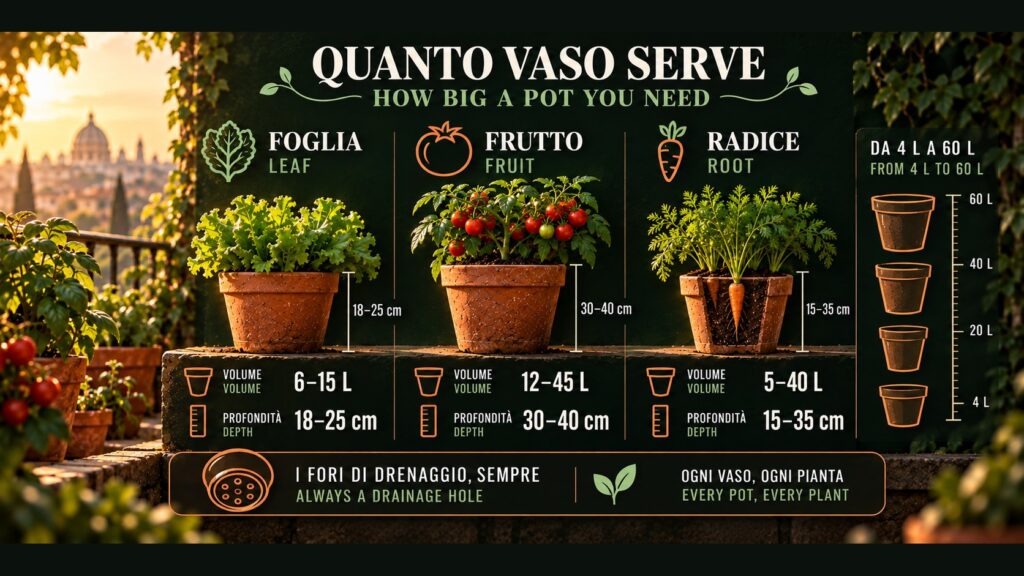
A full pot is far heavier than you’d expect. The reference values used by the site’s tools: an empty pot weighs about 4 kg, substrate has a density of about 0.75 kg per litre and water 1 kg per litre. A 30 L pot full of substrate and water can easily pass 25–30 kg. Before filling more pots, check your balcony’s weight limit (it is stated in the building documentation or communicated by the owners’ association) and spread the weight.

3. Start with few, not many
The most common mistake is filling the whole balcony at once. Start with 3–5 pots of different families (for example a leafy vegetable, an herb, a fast root crop), learn the rhythm of watering and care, then expand. A small, well-cared balcony garden always beats a big, neglected one.
4. Choose pots with drainage
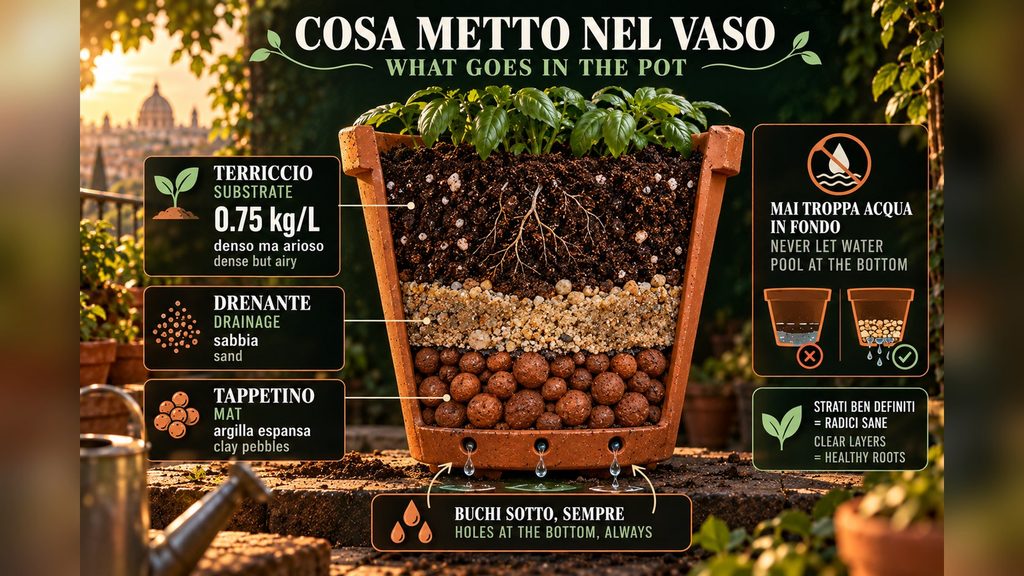
Every pot, without exception, must have its drainage holes clear. Waterlogging is the main cause of root rot and of many diseases. The dataset is unambiguous on this: for all 120 plants, drainage is mandatory.
5. The right season for a balcony garden
Most fruiting and root crops are started after frost risk, when temperatures pass about 15 °C. Leaf crops and herbs tolerate the cold better and can start earlier. The dedicated guide on sowing and transplanting reports the calendar.
Sources
- Royal Botanic Gardens, Kew — Plants of the World Online — taxonomy
- Royal Horticultural Society — plant care
- University of Maryland Extension — container growing
- University of Minnesota Extension — container + climate
- Penn State Extension — urban container growing