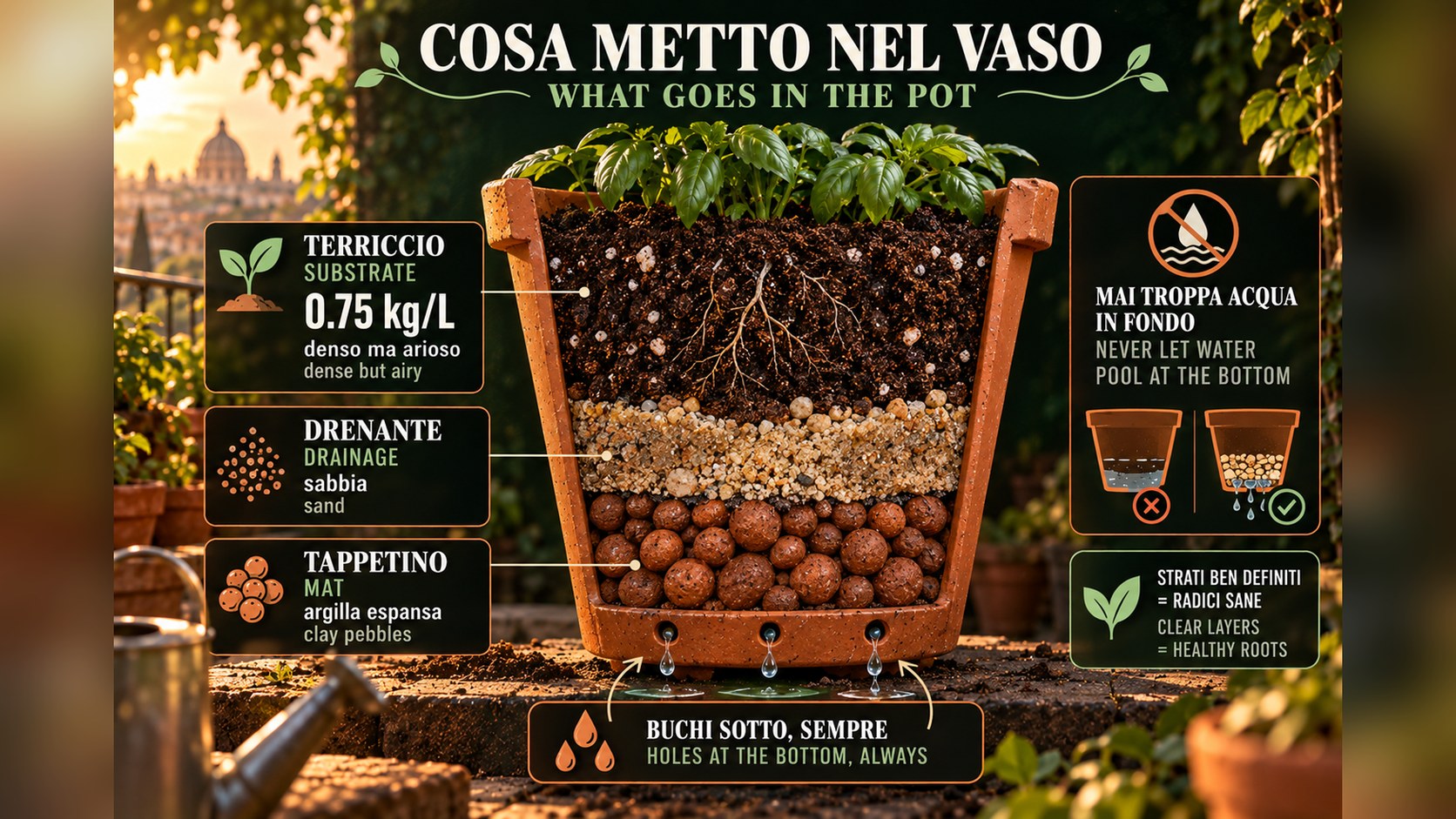

Substrate and drainage are the base of every container: the substrate is not “soil”, it’s a mix built to hold water and nutrients while still letting the roots breathe. The reference density used by the site’s tools is about 0.75 kg per litre, a value that balances weight, aeration and water capacity.
The structure of a good pot substrate
- Structural organic component (mature compost, preferably peat-free): holds nutrients and water, the basis of substrate and drainage in every pot.
- Drainage component (coarse sand, perlite, clay pebbles): about 20–30%, lets excess water pass and aerates the roots.
- A drainage base: a bed of clay pebbles or sand at the bottom of the pot, and the holes always clear.

The rules of substrate and drainage
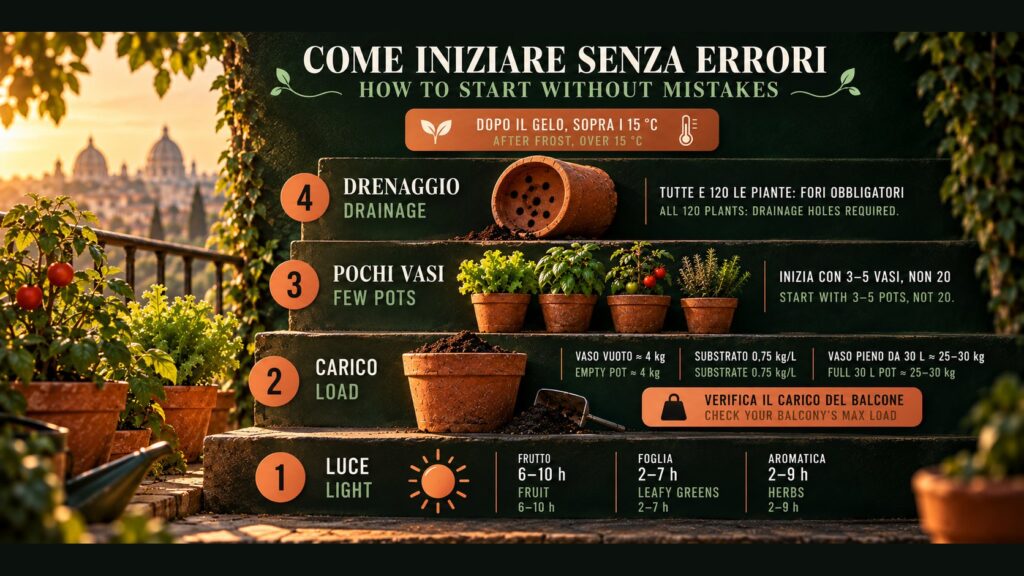
- Mandatory drainage. For all 120 plants in the dataset, drainage holes are required. A pot without holes is a recipe for rot.
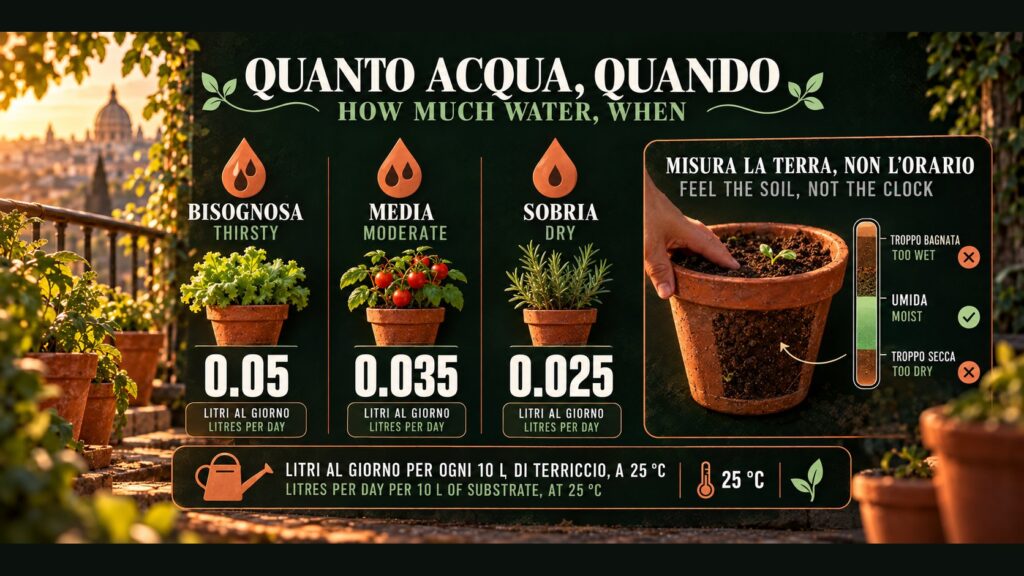
- No waterlogging. After watering, excess water should flow out; if the saucer stays full, empty it.
- Repot when needed. When the roots fill the pot and water drains straight through, it’s time for a bigger pot or a substrate refresh.
The Substrate and drainage tool helps calculate the mix based on the plant and the pot volume.
Sources
- Royal Botanic Gardens, Kew — Plants of the World Online — taxonomy
- Royal Horticultural Society — plant care
- University of Maryland Extension — container growing
- University of Minnesota Extension — container + climate
- Penn State Extension — urban container growing