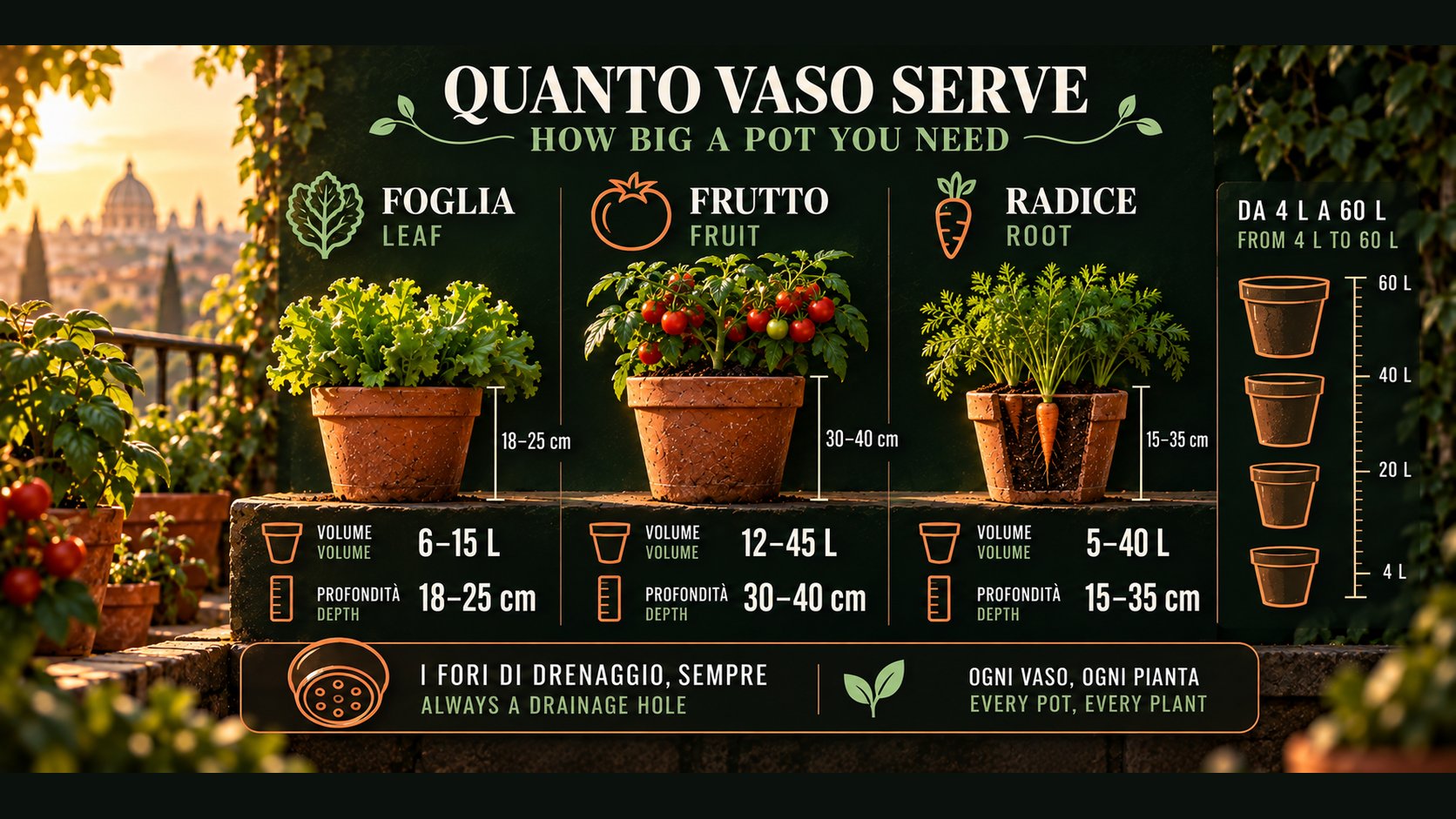

The right pot is not just any container: its volume and depth decide how much soil the root can use and how much water it can hold. The data below are real, taken from the 120 validated profiles, grouped by family.
The right pot: volume and depth per family
| Family | Min pot | Depth | Examples |
|---|---|---|---|
| Fruiting vegetable | 12–45 L | 30–40 cm | Tomato, Peppers |
| Leaf vegetable | 6–15 L | 18–25 cm | Lettuce, Swiss chard |
| Root or bulb | 5–40 L | 15–35 cm | Radish, Short carrot |
| Compact legume | 15–18 L | 25 cm | Dwarf bean, Dwarf pea |
| Herb | 4–30 L | 18–35 cm | Basil, Parsley |
| Soft fruit | 4–60 L | 30–45 cm | Strawberry, Blueberry |
| Beneficial flower | 5–15 L | 20 cm | Nasturtium, Calendula |

The rules that emerge from the data
- Fruiting vegetables want the biggest pots. The tomato alone needs at least 30 L and 35 cm of depth; small fruits like the blueberry can reach 60 L to give the roots room.
- Leaves need little. The right pot for lettuce is 6 L and 18 cm: it’s the most compact family.
- Roots have a minimum but vary. Radish is fine in 5 L and 15 cm; carrots and beetroot, which develop a taproot, want up to 35–40 cm.
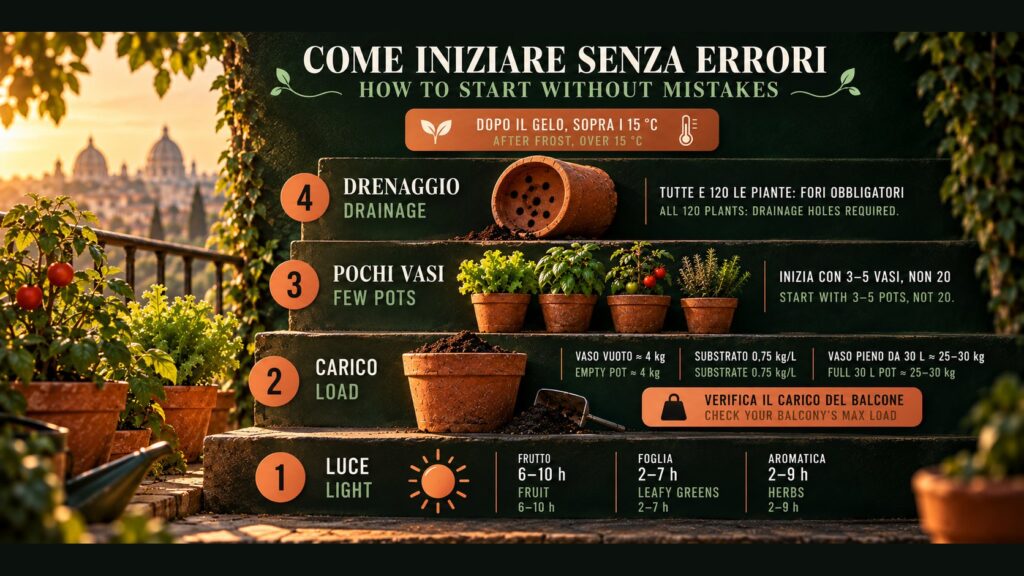
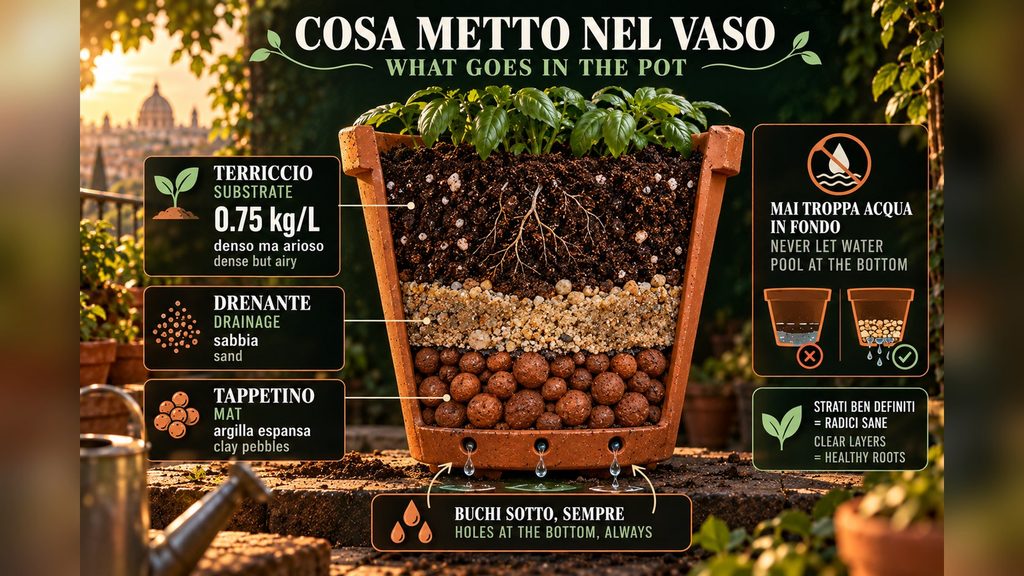
- Drainage always. Every family, every pot: holes clear at the bottom.
Use the Pot size and depth tool to calculate the right pot for the exact plant: the profile numbers are the real dataset values.
Sources
- Royal Botanic Gardens, Kew — Plants of the World Online — taxonomy
- Royal Horticultural Society — plant care
- University of Maryland Extension — container growing
- University of Minnesota Extension — container + climate
- Penn State Extension — urban container growing