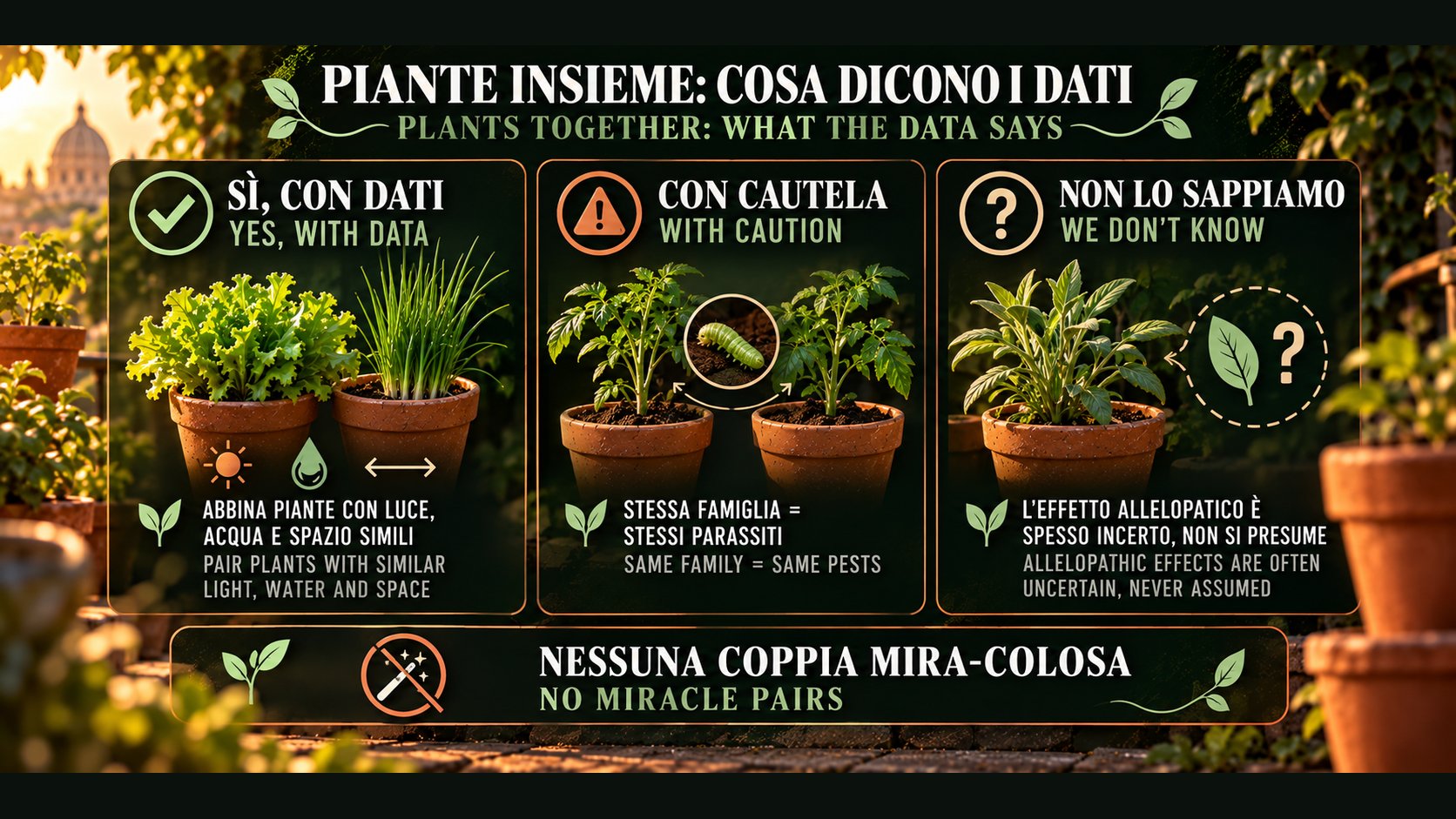

Companion planting is full of legends (“basil cures the tomato”). The data says otherwise: compatibility depends on light, water, space and family, not on magic. The site’s dataset is explicit on this: there are no miracle pairs and allelopathic effects are mostly uncertain and never assumed.
Companion planting: what compatibility really is
- Similar needs. Plants that want the same light, the same water and the same space coexist better: that is the real logic of companion planting, because you can manage everything together.
- Adequate space. Two plants that take light and air from each other are in competition, whatever the species.
- Same family = same pests. Putting more plants of the same family on the same balcony concentrates the risk of a specific pest.
What the research says, and what it doesn’t
Many famous pairs have little evidence behind them, and the scientific literature stays cautious. Where data exist, the documented effects are specific: for example, marigolds (Tagetes patula) can contribute to controlling root nematodes in the substrate, a recognized but not guaranteed benefit that depends on dose and conditions. Another real effect is that of flowers that attract useful insects: nasturtium, calendula and other flowering species draw in pollinators and natural predators (ladybirds, hoverflies) that keep aphids in check. This is not folklore: it is functional biodiversity on the balcony.

The honest rules
- Pair plants with similar light and watering needs: that is the real benefit.
- Give space: the right density (see the guide and the dedicated tool) avoids competition.
- Grow a useful flower (nasturtium, calendula): it attracts beneficial insects, a concrete and documented advantage.
- Don’t trust miracle pairs: they are not supported by the data.
The Compatibility and companion planting tool evaluates pairs based on these real factors.
Sources
- Royal Botanic Gardens, Kew — Plants of the World Online — taxonomy
- Royal Horticultural Society — plant care
- University of Maryland Extension — container growing
- University of Minnesota Extension — containers and climate
- Penn State Extension — urban container growing
- University of Vermont Extension — Creating a Biodiverse Vegetable Garden — beneficial flowers and nematodes