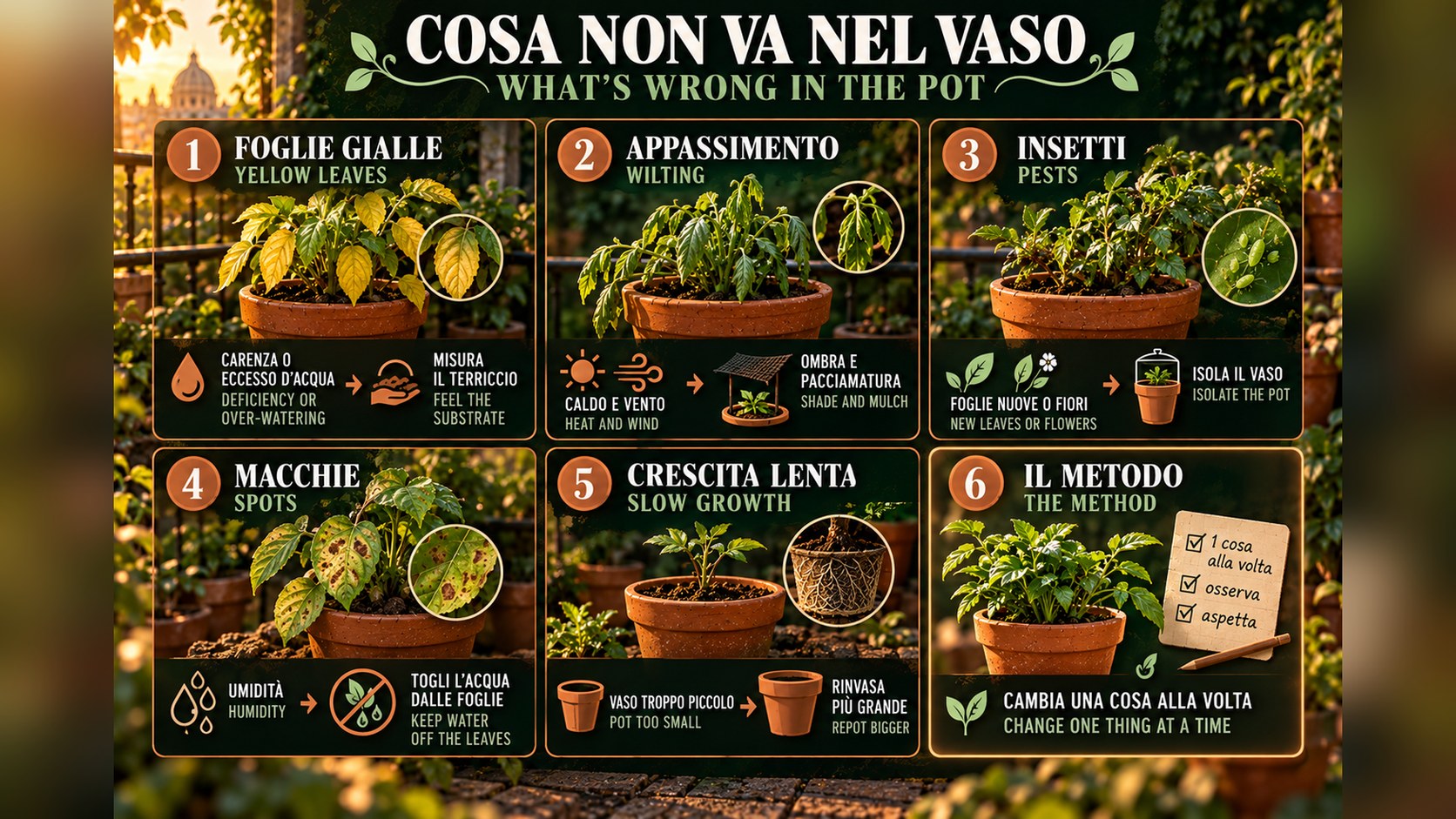

In a pot, pests and diseases are more frequent than in the ground, because the substrate is small and conditions change fast. Most causes come down to a few: water, air and space. This guide is diagnostic, not a recipe: identify the symptom, find the most probable cause, intervene.
Pests and diseases: the most common causes (from the data)
- Water stress (too much or too little): the number one cause of yellowing or wilting.
- Heat and wind: dry the substrate and stress the plant.
- Poor aeration: encourages aphids, mites and fungal diseases.
Diagnosis method
- Look at the symptom: yellow, wilted, spotted leaves, insects, slow growth.
- Check the substrate: is it soggy or dry? Waterlogging and drought are treated in opposite ways.
- Change ONE thing at a time: don’t fix everything together, you won’t know what worked.
- Isolate if needed: if you suspect a pest, separate the plant from the others until you understand what’s there.

When to ask for help
For extensive damage or doubts about treatments, consult a qualified technician: with pests and diseases, isolation comes before treatment. Don’t apply treatments (even “biological”) across the board: many problems are solved with the right water, light and space.
The Problems, pests and diseases tool guides you through the symptom → cause → fix method.
Sources
- Royal Botanic Gardens, Kew — Plants of the World Online — taxonomy
- Royal Horticultural Society — plant care
- University of Maryland Extension — container growing
- University of Minnesota Extension — container + climate
- Penn State Extension — urban container growing