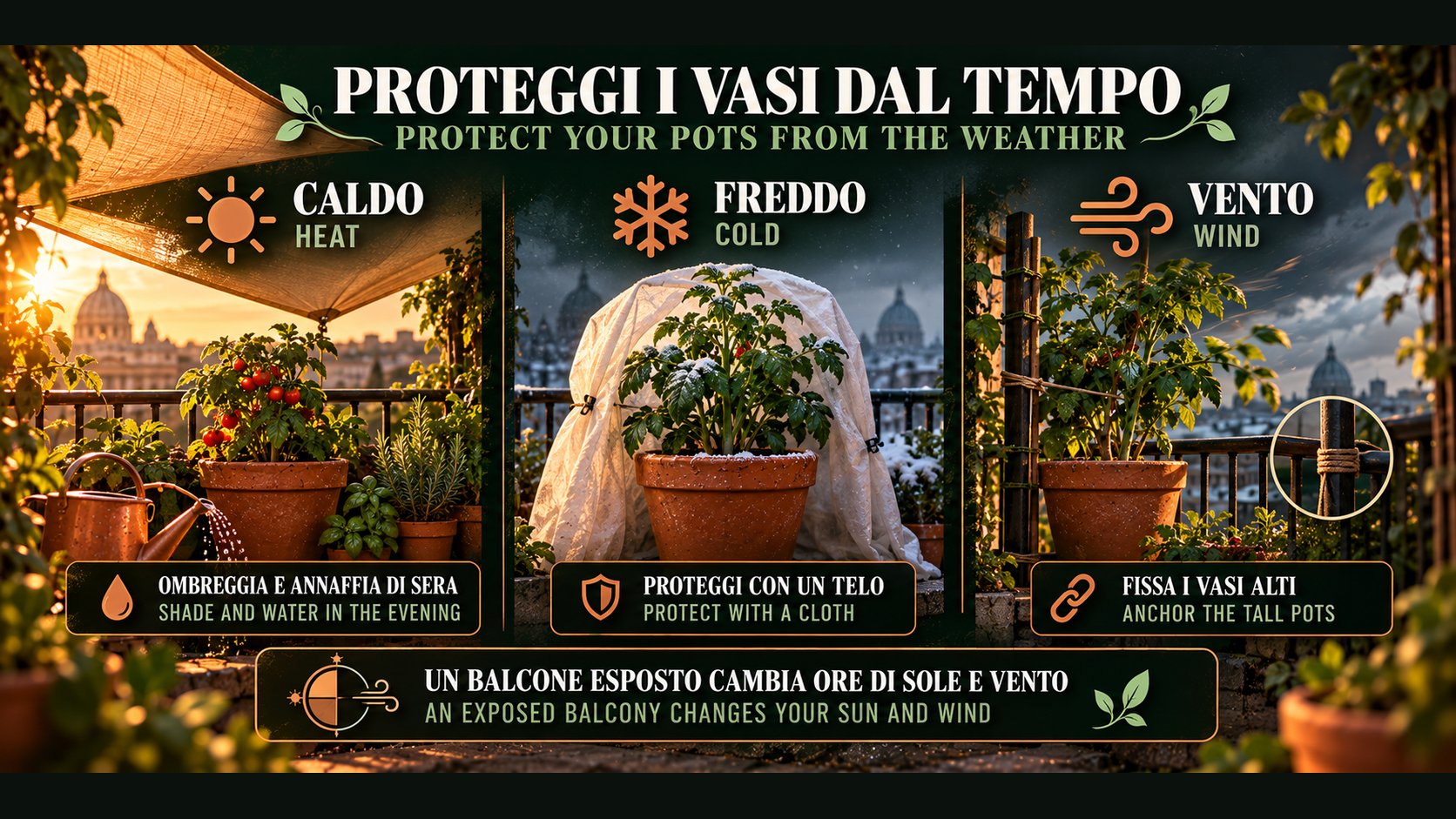

A balcony is more exposed to weather than a ground garden: no shade from buildings, no soil buffer, wind that dries everything out. The three main threats are heat, cold and wind, and each needs its own protection from weather.
Heat: protection from weather
In intense heat, especially on exposed balconies, the substrate dries in a few hours. Shade the most sensitive plants in the middle of the day, water in the evening when evaporation loss is lowest, and use a light mulch to hold moisture.
For heat peaks, two moves work. A 30–50% shade cloth, stretched over supports and kept off the leaves (otherwise the heat from the cloth burns them), protects lettuce and leafy greens on the hardest days. Watering early in the morning keeps the substrate cooler through the day: a well-moist substrate resists much better than dry soil, which sheds water instead of absorbing it.
Cold
Fruiting crops don’t tolerate frost: below 12–15 °C growth stops or the plants suffer. Protect them with a fleece or move the pots into a sheltered room during late or early frosts — the basic protection from weather for fruiting crops. Hardier leaf crops and herbs tolerate more.
A frost fleece can hold up to 5–6 °C more inside, as long as it stays dry and doesn’t touch the leaves: a wet fabric cools by evaporation, and direct contact with the frost burns the tissue. On cold, clear nights — radiation frosts, the most frequent in autumn and spring — the fleece is often enough; with an intense cold front the fleece alone is not enough, and the pots have to be moved into shelter.

Wind
Wind dries the substrate and can topple tall pots. Anchor the large pots and those with tall plants (tomato, grape, climbing bean) so they don’t tip over, without drilling railings or waterproofing. A windbreak or a tall pot on the exposed side reduces water loss: hot summer wind dries and breaks seedlings, so shielding them from the prevailing direction is real protection from weather.
The Protection from heat, cold and wind tool suggests the protection from weather actions based on your balcony’s exposure.
Sources
- Royal Botanic Gardens, Kew — Plants of the World Online — taxonomy
- Royal Horticultural Society — plant care
- University of Maryland Extension — container growing
- University of Minnesota Extension — containers and climate
- Penn State Extension — urban container growing
- Colorado State University Extension — Frost Protection and Extending the Growing Season — frost cloths and frosts
- Penn State Extension — Heat Proofing Your Vegetable Garden — shade cloth and heat waves