
The varieties of tomatoes in pots that really grow
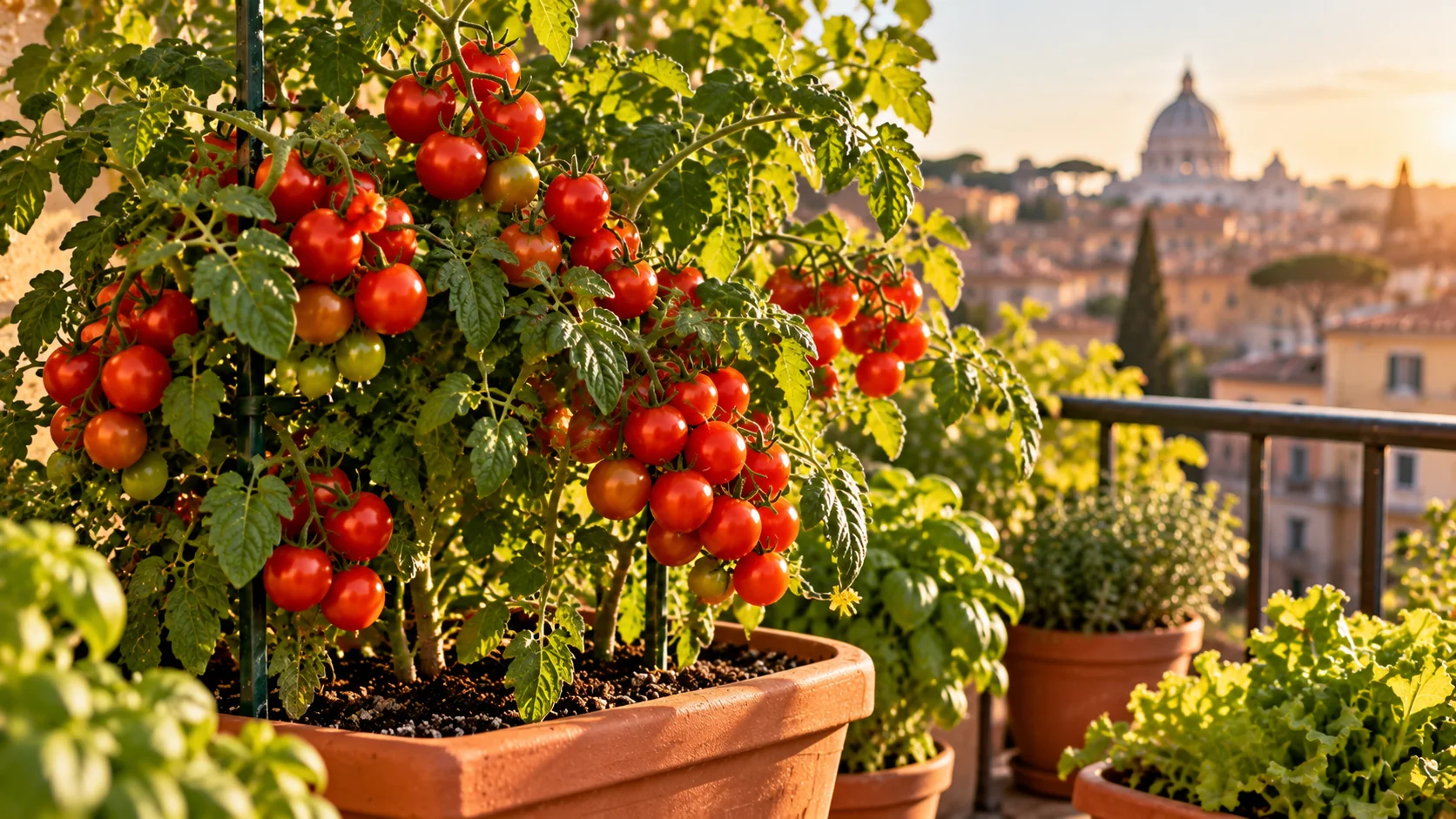
Before sowing, a truth few say: in pots, cherry tomatoes and compact varieties win, not the greenhouse ones. The big tomatoes (San Marzano, Costoluto) give 2–3 kg per plant in the ground. In a pot, on the same plants, you get 0.5–1 kg. The cherry tomatoes, in a 30-litre pot, give 2–4 kg.
The families that work on the balcony:
- Classic cherry: 20–30 g fruits, sweet, few problems. The safest choice.
- Bush varieties (determinate): they stop on their own, they do not need pruning. Ideal if the balcony is small.
- “Balcony” varieties (like Tumbling Tom): compact, designed exactly for the pot.
A good start is the Maskotka organic cherry tomato seeds, early and sweet, designed also for balconies; if you want more plants in reserve, a packet of cherry tomato seeds is enough for 3–4 pots.
The plant profile: read the complete tomato profile for cycle, sun and water.
Pot, soil, light for tomatoes in pots
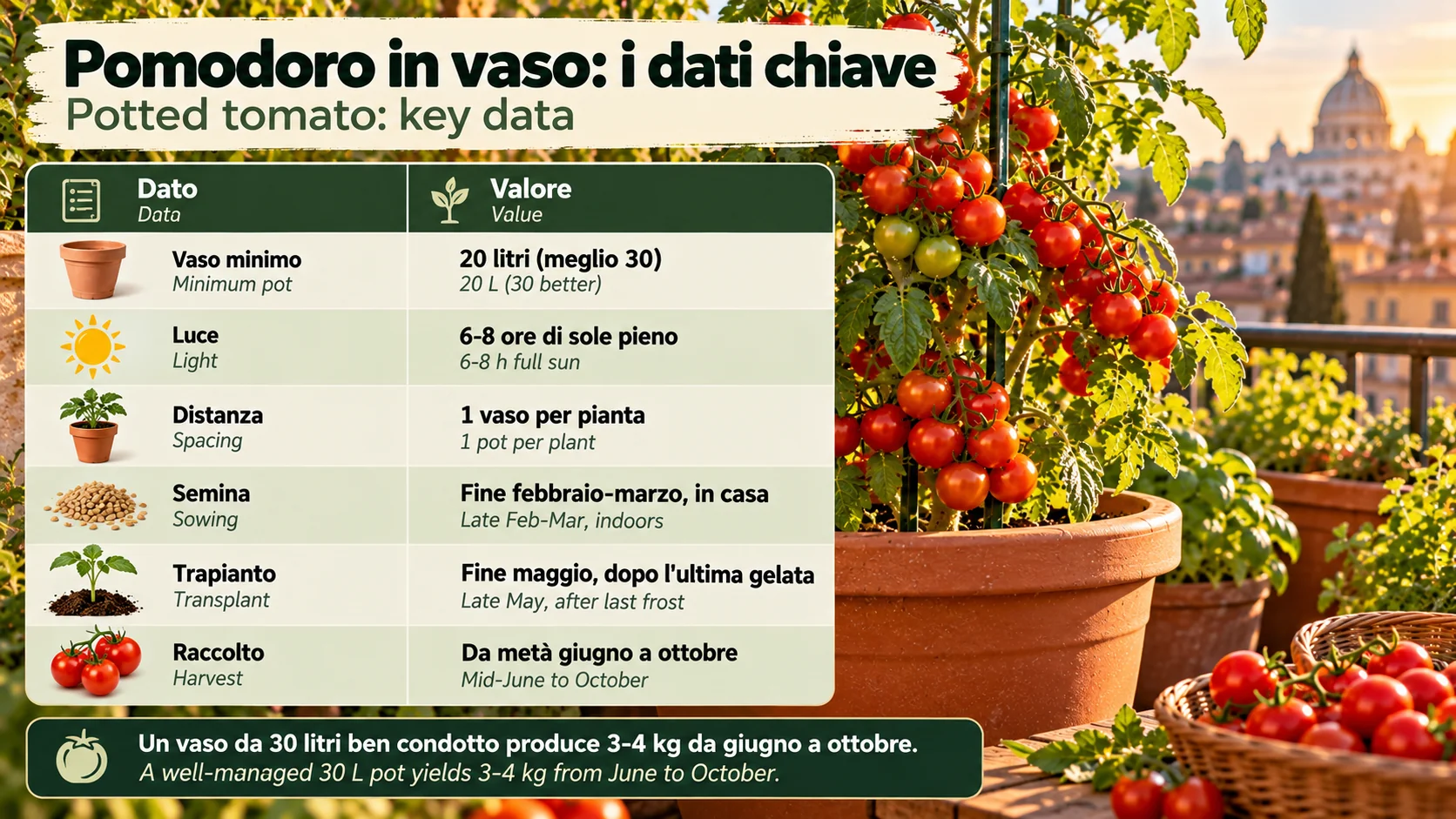
Three numbers to keep in mind:
| Data | Value |
|---|---|
| Minimum pot | 20 litres (30 is better) |
| Light | 6–8 hours of full sun |
| Distance between plants | 1 pot per plant, no more |
- Pot: 30 litres if you want 3–4 kg of fruit; 20 litres is the absolute minimum. The material matters little, the depth matters: 30–40 cm. See the buyer’s guide to pots.
- Soil: mix 50% all-purpose potting soil + 50% mature compost or humus; over the holes, only if they tend to clog, a thin veil of expanded clay (optional: what drains is the free holes, not the layer). The potted tomato “eats” the soil: the right mix is 50% of the harvest.
- Light: south or south-west. Below 6 hours of full sun the tomato makes flowers that fall without fruiting. If you only have east, aim for early varieties and expect 1–2 kg.
Sowing and transplanting
The honest calendar for northern and central Italy:
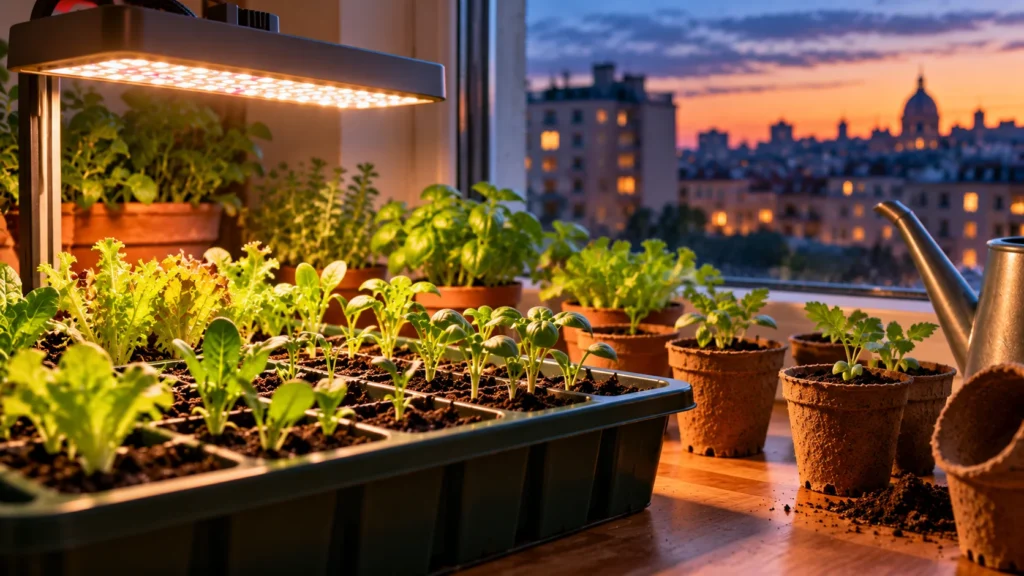
- Late February – March: sow indoors, in 8 cm potlets, at 20–25 °C.
- Late May: transplant to the pot, after the last frost. Below 10 °C at night the tomato stops.
- June: the first flowers.
Step by step:
- Put 2–3 seeds per potlet, cover with 5 mm of compost, keep it moist.
- When they appear, leave only the strongest seedling per potlet.
- With 4–5 true leaves and nights above 12 °C, transplant to the final pot.
- Water well the first day and keep the soil moist for 10 days: the roots have to take hold.
If you do not want to sow, the nursery seedlings in May are the legitimate shortcut: they cost 2–3 € and give you 6 weeks.
Suckering and support for tomatoes in pots
The tomato produces “suckers”: the little branches born in the axil between stem and branch. Left free, they consume energy and fill the plant with leaves instead of fruit.
- Big-fruit tomato: remove them every week, pinching them by hand when they are 3–5 cm.
- Cherry: you can leave them — the bush varieties manage on their own.
The support is there to keep the stem straight and let air in. The simplest method: a galvanized steel spiral support that you push into the pot before transplanting. It does not rot like wood, you do not need to tie: the plant climbs inside the spiral. For a 30-litre pot, 2 spirals are enough.
Watering tomatoes in pots: mistake no. 1
The potted tomato wants soil always moist, never sodden. The dry/wet alternation causes the two classic diseases:
- Fruits falling green (dryness stress).
- Fruits splitting at the bottom (re-soaking after a dry period).
The rules:
- Water in the morning, on the soil, never on the leaves.
- Check with the finger: 2 cm in dry = water.
- In full August, in a 30-litre pot, it is 1–1.5 litres a day.
- Mulching (straw or bark, 3 cm) halves the waterings.
Details and doses in the watering in containers guide.
Feeding
The tomato is the strongest eater of the garden. In a pot, that has no nutrient reserve, feeding is not optional:
- After transplanting: 1 week of pause, then a balanced fertiliser every 15 days.
- From flowering: switch to a fertiliser richer in potassium and phosphorus (for the fruit), once a week in full summer.
- Signal: old leaves yellowing towards August = the plant has no more food.
A specific granular fertiliser for tomatoes with calcium (useful against the black spot at the bottom of the fruit) does the whole cycle with one product. The exact doses per plant family: feeding in pots guide.
The diseases to know with tomatoes in pots
In a pot the tomato makes fewer diseases than in the ground, but you know the three:
- Black spot at the bottom of the fruit (blossom end rot): it is not a fungus, it is calcium deficiency from irregular watering. It is cured with constant irrigation, not with products.
- Downy mildew: brown spots on the leaves, yellow halos. It comes with the hot-rain alternation. Remove the affected leaves, water at ground level, avoid the evenings with high humidity.
- Grey mould: in autumn, on the old fruits. Harvest everything before it arrives, do not let them ripen on the plant after September.
Prevention is worth more than the remedy: air between the branches (suckering), no water on the leaves, punctual harvest.
Harvest
The first ripe cherry tomatoes arrive in mid-June, the big ones in mid-July.
- Harvest when the fruit is fully coloured, pressing lightly: it must give a little.
- Always start from the low fruits: they hold energy for the high ones.
- Fruits picked green ripen at home in 3–4 days in the dark: useful in autumn, when the cold arrives.
- A well-run 30-litre pot produces from June to October: 3–4 kg in total. Not 10 kg: that is the catalogue number, not the balcony number.
10 questions about tomatoes in pots
Why do the flowers fall? Either there is no pollination (give the plants a light shake every now and then) or there is stress: too much sun without water, or heat above 35 °C.
Why do the fruits stay green? They need nights above 12–14 °C and light. If it is early, it is normal. If it is October, pick them green and ripen them at home.
Can I keep the plant two years? No, on the balcony the tomato is annual. The second year it produces little and makes more diseases.
How many plants do I put on a 4 m² balcony? One or two. The tomato is not a plant for “filling the balcony”: it is a plant for a big pot and full sun.
The leaves have yellowed? Go to the yellow leaves diagnosis: in the tomato it is almost always nitrogen deficiency or irregular water.
Why are the fruits small? Pot too small, little light, or too many fruits per plant. Cut the excess trusses in mid-July.
Is the cherry easier than the big one? Yes: sweeter, more productive in pots, more resistant. It is the right choice for the first year.
Is a 20-litre bucket enough? It is the minimum. It works, but expect 1–2 kg and water every day in August.
Do I have to feed, no matter what? In the ground no, in a pot yes: the substrate is exhausted in 6–8 weeks.
Is it worth buying seedlings? Yes, in May it is the best quality-effort ratio of the potted garden.
Recommended products in this article
Sources
- Orto da Coltivare — tomato: cultivation, varieties, diseases
- CREA — growing the tomato in containers
As an Amazon Associate I earn from qualifying purchases. Note: some links on this site are affiliate links: if you purchase through them, I may receive a commission at no extra cost to you. Affiliate links never influence my recommendations.